

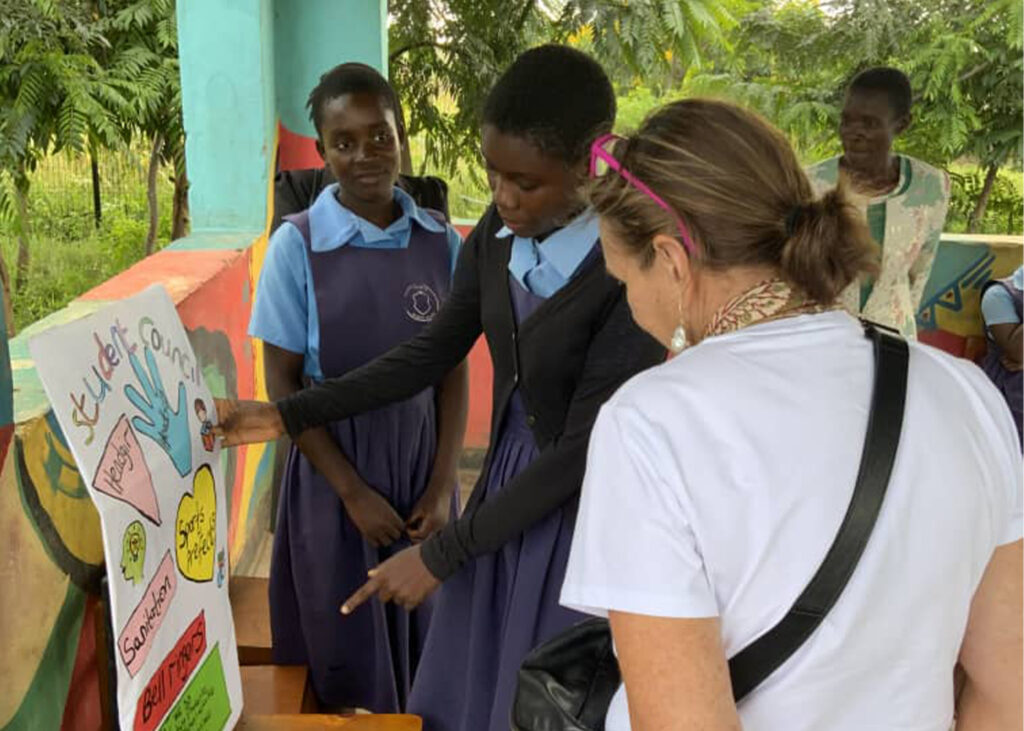
When Leonie Bell visited MATCH Foundation, her focus was clear and urgent: How can learning outcomes in Malawi be improved—not just today, but for the future? What she discovered was not a single solution, but a carefully designed, holistic approach that is quietly transforming how education is delivered and experienced.
Malawi’s education system faces well-known challenges—overcrowded classrooms, limited resources, and uneven learning outcomes. Yet MATCH Foundation is demonstrating that meaningful change does not always require large-scale disruption. Instead, it can be achieved through targeted, student-centered interventions that strengthen the system from within.
At the core of MATCH’s work is a commitment to educating the whole child. This begins with improving the physical learning environment. By upgrading school infrastructure, the organization creates spaces that are not only functional but also dignified—places where students can focus, participate, and feel valued. But the transformation goes beyond buildings.
MATCH addresses one of the most critical barriers to quality education: high student-teacher ratios. By reducing class sizes, teachers are able to give more attention to individual learners, continuously assess their progress, and provide the support needed to help each child succeed. This is reinforced through the use of Teaching at the Right Level (TaRL), an approach that groups students based on their actual learning ability rather than age or grade. The result is a more inclusive classroom where foundational skills—especially in literacy and numeracy—are effectively strengthened.
The impact is already visible. Students are achieving pass rates significantly above regional averages, a testament to the effectiveness of these focused interventions. However, MATCH’s vision extends far beyond academic performance.
Recognizing that education must prepare students for life—not just exams—the organization integrates Project-Based Learning into its curriculum. This approach encourages learners to apply knowledge in practical, real-world contexts, building critical thinking and problem-solving skills. Physical education is also embedded into the learning journey, promoting overall well-being and discipline.
Equally important is the emphasis on social and emotional development. Through mentorship programs and school clubs, students are supported to build confidence, resilience, and leadership skills. For girls and young women, MATCH is expanding pathways into skills development, ensuring they are not only educated but also empowered to pursue meaningful opportunities.
Rather than operating in isolation, MATCH Foundation works alongside government efforts, offering a complementary model that demonstrates what is possible when education is approached holistically. The organization’s work serves as a powerful example of how targeted, evidence-based strategies can accelerate progress within existing systems.
For Leonie Bell, the visit underscored a hopeful reality: despite systemic challenges, there are practical solutions already making a difference. And for the students benefiting from MATCH’s approach, that difference is profound—turning education from a daily routine into a pathway for opportunity and growth.
As MATCH Foundation continues to refine and expand its work, one thing is clear: the future of education in Malawi is not just being imagined—it is being built, one classroom at a time.